

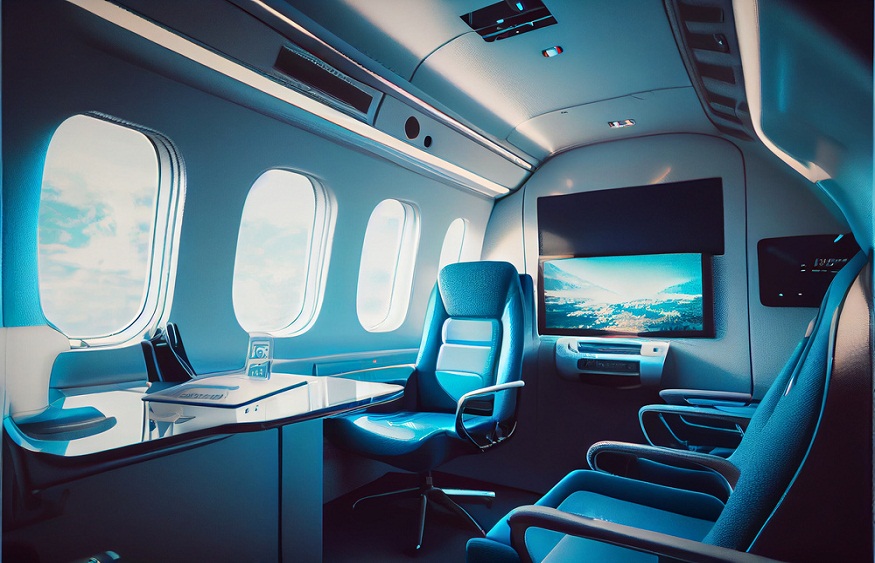
Special mission aircraft tackle jobs regular planes never could. Search and rescue teams rely on them. Government officials travel in them. Surveillance crews operate from them. Medical teams save lives with them. But here’s the thing: turning a normal plane into one of these specialized machines gives engineers massive headaches.
Weight Distribution and Balance Problems
Ever balanced a broomstick on your finger? Now try it with someone randomly sticking weights along the handle. That’s what aircraft engineers deal with daily. A front-heavy radar dome may require tail sandbags. Sounds crazy, but it works.
Read More : How Stratos’ Dutch Built 50 is redefining all-weather yachting
Weight and balance math is complex. Engineers calculate everything down to individual bolts. One surveillance antenna installed six inches off target can affect fuel burn rates. The plane might pull to one side. Pilots need to fight the controls constantly. Weight creep sneaks up on projects. First, someone wants armor plating. Then bigger computers. Suddenly, the plane struggles to take off. Engineers defend with titanium and carbon fiber. Expensive? You bet. But when every ounce counts, you pay the price.
Power Systems and Electrical Demands
Picture your home’s electrical panel. Now multiply those power needs by twenty. That’s what special mission equipment demands. Some surveillance gear pulls incredible amounts of juice. Radar systems, computers, communication equipment; they’re all power-hungry. Medical planes run ventilators and heart monitors that absolutely cannot fail. One power hiccup could kill someone.
So engineers get creative. They stuff auxiliary generators wherever they fit. Battery banks hide in cargo holds. Miles of heavy-gauge wire snake through the fuselage. But all that equipment gets hot. Without cooling, circuit boards melt. So now you need bigger air conditioners, which need more power. See the problem?
Space Optimization and Modular Design
Special mission planes shape-shift between jobs. Monday’s spy plane becomes Wednesday’s cargo hauler. Engineers build interiors like expensive Lego sets; everything snaps together and comes apart. The floors get peppered with mounting points. Think of them as universal sockets for equipment. Walls have rails and brackets ready for anything. Companies like LifePort make mission seating that transforms like furniture in those tiny house TV shows. Seats become desks. Desks become equipment racks. Pretty clever stuff that gives crews options without rebuilding the whole interior.
Storage hides everywhere. Under floors. Behind panels. Inside curved spaces nobody else would use. Engineers measure every odd-shaped corner and build custom boxes to fit. Workstations fold into walls when not needed. Equipment platforms slide under other gear. It’s three-dimensional Tetris with million-dollar consequences for wasted space.
Environmental Control Challenges
Alaska to Arizona. Sea level to 45,000 feet. These planes face wild temperature swings. Electronics built for room temperature suddenly face minus 60 degrees. Then they bake in desert heat. Most gear can’t handle it. Pressure changes wreck equipment too. Ever notice your water bottle crunch on a regular flight? The same thing happens to sensitive electronics. Engineers build pressure-proof boxes for delicate stuff. They add special valves that let pressure equalize slowly.
Read More : Valleys of Ice, Peaks of Fire EBC trek, Island Peak Climbing, Cho La Pass Trek
Planes shake like paint mixers. Vibrations from engines and turbulence damage screws and circuit boards. Engineers mount equipment on rubber shock absorbers. They use flexible cables instead of rigid connections. Some really sensitive gear sits on platforms that float on air cushions.
Conclusion
Special mission aircraft push engineering into uncharted territory. Every solution creates new problems. Fix the weight issue, and you get power problems. Solve the power problems, and heat becomes your enemy. Beat the heat, and now you’re overweight again. Engineers juggle these competing demands while lives and missions hang in the balance. Tomorrow’s special mission planes will encounter greater difficulties, yet engineers consistently devise solutions.